
Every GBOB business lives or dies on one thing: the quality and size of your vendor list. Beginners often stop at the first ten sites they find and wonder why orders dry up fast — while established practitioners work from lists of hundreds, split deliberately by tier. This guide covers how to find GBOB vendors at every level, from everyday niche blogs to the premium, high-authority sites that command real money.
⚡ Quick Summary
- Vendors split into two tiers — normal (authority score 20–60) and premium (60–80+) — and each needs a different approach.
- “Write for us” style searches find normal-tier vendors fastest, with reply rates well above cold outreach.
- Premium sites rarely accept pitches from the company itself — you approach individual contributors and writers instead.
- Competitor and referring-domain mining can surface thousands of prospects from a single strong site.
- Advance payment is non-negotiable on premium-site deals — this space has real scam risk.
Your vendor list isn’t a one-time task — it’s the compounding asset that makes every future client order faster to fill.
How to Find GBOB Vendors
Short answer: find normal-tier vendors (authority score 20–60) through “write for us” style Google searches and referring-domain mining, and find premium vendors (60–80+) by approaching individual contributors and writers at large sites rather than the company itself. Different tiers need different tactics — treating them the same wastes effort on both ends.
Finding Normal-Tier Vendors (Authority Score 20–60)
This is where most of your list will come from, and it’s the fastest tier to build.
The “write for us” method: search Google for an invite phrase plus your niche — “write for us” + “technology,” for example. Sites publishing these pages are actively inviting guest content, and they reply at a noticeably higher rate than cold, unadvertised targets. Ask an AI tool for 10–20 variations of the invite phrase (“submit a guest post,” “contribute an article,” “become a contributor”), then rotate them with different niche terms — each unique combination surfaces a fresh set of results, so the well doesn’t run dry after the first few searches.
The SERP-export shortcut: instead of manually opening each result, run the same search inside an SEO tool’s keyword or SERP-analysis feature, switch the view to domains, and export the whole batch with authority score and traffic attached — turning an hour of one-by-one checking into a five-minute filtering job.
Referring-domain mining: pick one strong site in your niche and pull its referring domains through any backlink tool. Every domain on that list has already published a link for someone, making them proven, reachable prospects — filter by authority score to focus the list.
Country-specific targeting: combine the invite-phrase method with a country-code domain filter (or a `site:.fr`, `site:.de` style operator) when a client needs region-specific placements — translating the invite phrase into the local language often surfaces additional unique results English-only searches miss.
Finding Premium-Tier Vendors (Authority Score 60–80+)
Premium sites — think major publications with millions of monthly visitors — play by different rules. They almost never respond to a generic company pitch, and the real path in is through the individual writers, contributors, and editors who publish there.
Identifying premium sites: ask an AI tool for a list of premium publications in your target market, or take one confirmed premium site and check its main organic competitors in an SEO tool’s domain overview — competitors of a premium site are often premium themselves, though you’ll need to manually sort by actual topic since automatic categorization isn’t fully reliable.
Finding the right contributor: use a Google search operator like `site:domain.com “contributor” “your topic”` to surface recent posts by role and topic. Prioritize contributors who’ve published within the last 2–4 months — inactive bylines are a common time-waster, since people rotate in and out of these roles constantly.
Approaching them: connect on LinkedIn with a short, personalized note referencing their specific article — this measurably improves acceptance rates over a blank connection request. If they don’t respond or aren’t reachable there, email-finder tools can extract a verified email directly from their LinkedIn profile, and most support bulk company-level searches filtered by role (contributor, writer, editor) to pull dozens of contacts at once rather than one at a time.
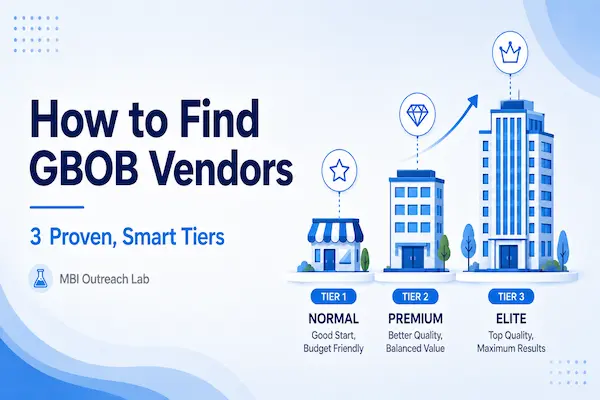
Vendor Tier Decision Table
Use this to match your effort to the right tier before you start outreach:
| Tier | Authority Score | Best Approach |
|---|---|---|
| Normal | 20–60 | Direct email via “write for us” pages, bulk search-export |
| Premium | 60–80 | Individual contributor outreach via LinkedIn/email |
| Elite | 80+ | Contributor outreach, agency partnerships, or your own proven relationship list |
⚠️ Watch for this: premium-site scams are common in this space — someone claims access to a famous publication, takes payment, and delivers nothing. Always collect advance payment from your own client before placing any premium order, and if a client won’t pay upfront, route the order through a freelance platform’s milestone payment system instead. It’s also worth vetting every placement against Google’s own link spam policies, since a scammy vendor and a manipulative link often go hand in hand. One scam on a “big” deal can erase a year’s worth of small-order profit.
💡 Pro tip: keep normal-tier and premium-tier vendors in separate lists or sheet tabs. Mixing them makes it easy to accidentally quote premium pricing on a normal-tier site, or undersell a premium placement because it got lost among smaller ones.
📊 Building a vendor list from scratch
Illustrative example, not a guaranteed outcome: a beginner spending focused time over two weeks on “write for us” searches across five niche variations can realistically compile 150–200 unique normal-tier prospects, with roughly 20–30% clearing a basic authority and traffic filter — enough for a first meaningful outreach batch. Premium-tier lists build far slower; even 10–15 solid contributor contacts in the first month is a reasonable, healthy pace, not a disappointing one.
Common Misconceptions About Finding Vendors
“More Vendors Always Means More Orders”
A bloated, unfiltered list wastes outreach time on sites that will never convert. A smaller, properly vetted list consistently outperforms a huge unfiltered one.
“Premium Sites Should Be Approached the Same Way as Normal Ones”
Direct company pitches to premium sites are almost always ignored. The contributor-level approach isn’t optional extra effort — it’s the only approach that reliably works at this tier.
“You Only Need to Build Your Vendor List Once”
Vendor relationships and site quality both drift over time — new prospects need adding continuously, and old ones occasionally need re-vetting.
“Directory Lists Are as Good as Building Your Own”
Public directory lists get pitched by everyone, saturating their inboxes and diluting response rates. Sites you find yourself through search or competitor mining are far less fished-over.
Learn More: Finding Guest Post Opportunities
A practical look at vendor discovery tools and techniques — useful alongside the tiered approach covered here.
Need Help Building Your Vendor Database?
Have questions about vendor research or vetting?
Get in touch and we’ll point you toward the right resources for wherever you are in building your GBOB vendor list.
Frequently Asked Questions
What’s the easiest way to learn how to find GBOB vendors as a beginner?
Start with normal-tier vendors using “write for us” style Google searches combined with your niche — this is the fastest, lowest-effort way to build your first working list of 20–30 prospects.
What authority score should GBOB vendors have?
Roughly 20–60 covers most useful normal-tier sites. Above 60 shifts into premium territory, which needs a completely different, contributor-level outreach approach.
Do I need paid tools to find vendors?
No — Google searches and free-tier SEO extensions cover normal-tier vendor discovery. Paid tools speed up bulk filtering and premium-tier contact-finding, but aren’t required to start.
How many vendors do I need before I start taking clients?
There’s no fixed number, but 20–30 vetted normal-tier vendors is a reasonable starting point — enough variety to serve a first client’s niche without over-relying on one or two sites.
Why won’t premium sites respond to my direct pitch?
Premium publications receive far more inquiries than they can act on, and company-level pitches rarely reach anyone with actual publishing authority. Individual contributors and writers are far more reachable and responsive.
Is it safe to pay premium-site vendors upfront?
Verify the vendor’s track record first, and always collect advance payment from your own client before paying a vendor — this protects you from the scam risk that’s common at the premium tier.
Final Thoughts
Learning how to find GBOB vendors properly means treating it as two separate skills, not one. Normal-tier vendors reward volume and smart search combinations; premium vendors reward patience and contributor-level relationship building. Build both lists deliberately, keep them separate, and your vendor database becomes the asset that makes every future client order faster to fill.
Related Reading
More from MBI Outreach Lab:
- What Is GBOB? 8 Proven Skills, Honest Guide
- How to Analyze Bloggers for Link Building: 7 Proven Tips
- How to Find GBOB Clients: Lead Generation (coming soon)
- GBOB Terms & Glossary (coming soon)
