
Why blogger outreach campaigns fail is a question most buyers only ask after the budget is already spent. You sent the emails, closed some placements — and three months later, rankings haven’t moved. If that sounds familiar, you’re not alone: most blogger outreach campaigns don’t fail because outreach is broken as a strategy. They fail because of a handful of avoidable, structural mistakes made before the first email ever goes out. This guide breaks down the strategy-level reasons — not just “write better emails,” but the deeper causes behind wasted budgets and rankings that never move.
⚡ Quick Answers (TL;DR)
- Most common cause: no real vetting process — buying links based on inflated metrics instead of real traffic and relevance.
- Second most common: treating outreach as a one-time purchase instead of an ongoing program.
- Silent killer: no tracking or attribution — you can’t fix what you can’t measure.
- Fast fix: most failing campaigns can be diagnosed with three questions covered below, before spending another dollar.
- The good news: every failure pattern here is fixable with process, not more budget.
Blogger outreach campaigns rarely fail because the strategy is wrong — they fail because the process behind it was never built to survive contact with reality.
Why Blogger Outreach Campaigns Fail
Short answer: campaigns fail when links are bought without real vetting, treated as a one-time transaction instead of a program, tracked poorly or not at all, and measured against unrealistic timelines. Fix the process, not just the pitch, and most failures are preventable.
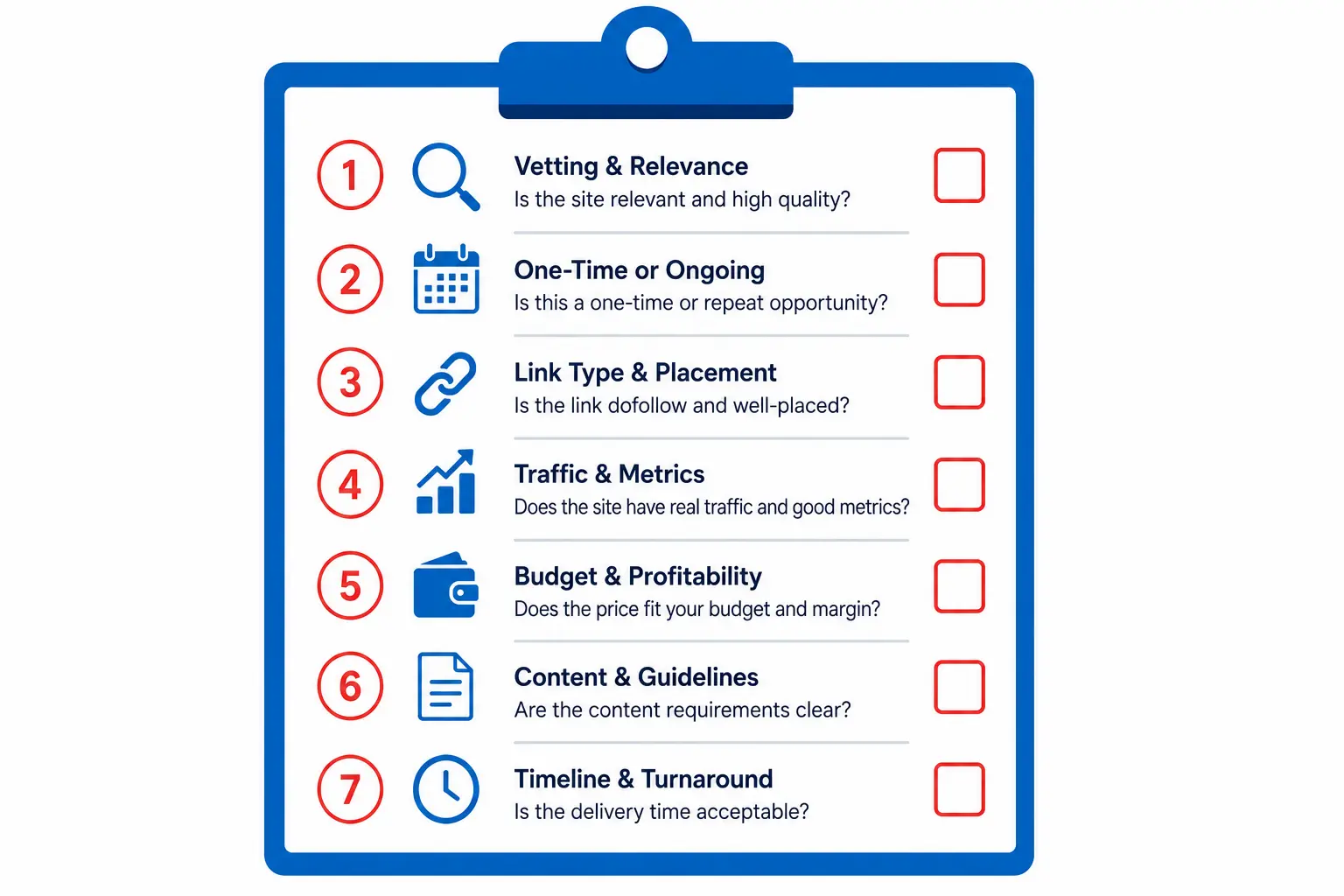
7 Reasons Blogger Outreach Campaigns Fail
1. No Real Vetting Process
This is the single biggest cause of wasted budget. Buyers see an impressive authority score and assume the site is worth linking from — without checking real traffic, where that traffic comes from, or whether the six-month trend is growing or dying. A link from a site with inflated metrics and no real audience delivers close to nothing, no matter how good the number looks on a screenshot.
2. Treating It as a One-Time Purchase
Ten links bought in one burst, then silence for six months, rarely moves competitive rankings. Search engines reward a steady, natural-looking placement pattern far more than a single spike. Campaigns that treat outreach as “buy links, check the box, done” almost always underperform campaigns that treat it as an ongoing monthly program.
3. Wrong Link Type for the Goal
Buyers frequently don’t confirm whether they’re getting a dofollow, nofollow, or sponsored link — then wonder why rankings didn’t respond. If ranking movement is the goal, a portfolio full of nofollow and sponsored links will never deliver it, even if every other part of the campaign was executed well.
4. No Tracking or Attribution
Without a log of what was built, where, when, and at what authority level, there’s no way to know which placements actually helped and which were wasted money. Campaigns that don’t track this repeat the same mistakes indefinitely because nobody can see the pattern.
5. Misallocated Budget Across Tiers
An all-budget-tier link profile signals weakness; an all-premium profile burns cash on volume you don’t need. The campaigns that perform best mix a majority of solid mid-tier placements with a smaller number of high-authority ones — an unbalanced allocation in either direction underperforms a mixed one.
6. Content That Isn’t Worth Linking To
Even a perfectly vetted, high-authority site won’t save a placement built around thin, generic content. If the article a vendor publishes offers nothing a reader couldn’t get from a dozen other sources, it does little for brand trust even where the link itself is technically sound.
7. No Clear KPI or Realistic Timeline
Expecting page-one rankings within a few weeks of the first placement sets a campaign up to be judged a “failure” before it had a real chance to work. Ranking movement from outreach typically shows up over two to four months of consistent activity — campaigns measured against week-four results are being judged by the wrong clock.
Diagnose Your Own Campaign
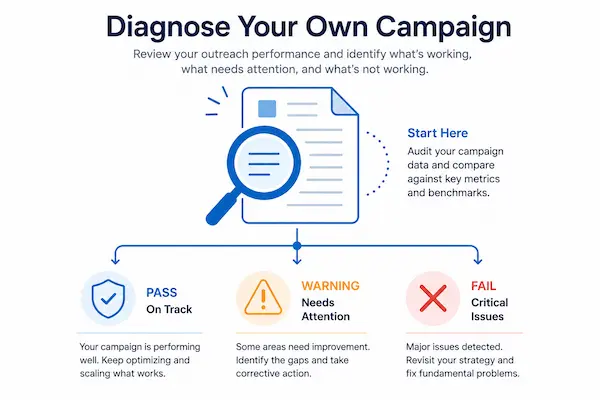
Use this table to match what you’re seeing against the most likely root cause and fix:
| Symptom | Likely Root Cause | Fix |
|---|---|---|
| Links built, rankings flat | Weak/inflated site quality | Re-vet every live placement’s real traffic and trend |
| Good first month, then nothing | One-time burst, not a program | Switch to a steady monthly placement cadence |
| Traffic up, rankings unchanged | Nofollow/sponsored-heavy link mix | Audit link types; prioritize dofollow for ranking-focused pages |
| Can’t explain what’s working | No tracking/attribution | Log every placement: URL, tier, cost, date, result |
| Budget gone, few placements to show | Overspending on premium tier | Rebalance toward a mid-tier-majority mix |
⚠️ Watch for this: if a campaign shows zero movement after four to six months with consistent monthly placements, the problem usually isn’t patience — it’s one of the seven causes above. Re-audit before spending another month on the same broken process.
💡 Pro tip: run this diagnosis quarterly even on campaigns that seem to be working. Vendor quality drifts, traffic trends shift, and a site that was strong six months ago isn’t guaranteed to still be worth the placement today.
3 Early Warning Signs a Campaign Is Already Failing
Beyond the root causes, watch for these signals before month three rolls around and the whole quarter’s budget is spent:
- Reply rates under 10% on invite-page prospects. Sites actively inviting guest posts should reply at 20-30%+ — a lower rate signals a pitch or targeting problem worth fixing immediately, not after the campaign ends.
- Every placement lands at the same authority tier. A portfolio with zero variation usually means the vetting process defaulted to “whatever’s easiest” rather than a deliberate mix.
- Nobody can name which placements delivered value. If a review of the campaign can’t point to specific links tied to specific ranking or traffic movement, tracking broke down somewhere — and it’s worth fixing before adding more spend on top of an unmeasured system.
📊 A campaign we diagnosed and turned around
In early 2026, a client came to us after six months and roughly $2,100 spent on outreach elsewhere with almost no ranking movement. The diagnosis matched three of the causes above: 60% of the links were on sites with authority scores under 15 (below our normal 20 floor), a third were nofollow with no disclosure to the client, and there was no placement log at all. We rebuilt the campaign around a proper vetting floor and a 70/30 mid-tier-to-premium mix, tracked every placement from day one, and within 11 weeks the client’s two priority pages moved from page 4 to positions 9–14 — the first measurable movement in the entire prior six months.
Learn More: What Goes Wrong in Link Building Campaigns
A closer look at why spending on backlinks alone doesn’t guarantee results — useful context alongside the diagnostic table above.
How Long to Wait Before Calling a Campaign a Failure
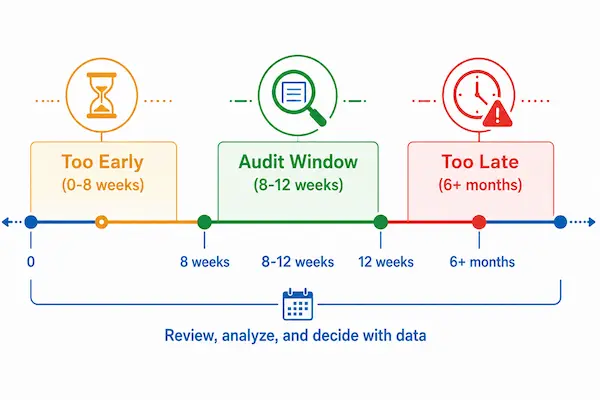
One of the most expensive mistakes in outreach isn’t a bad placement — it’s judging a campaign too early or too late. Both directions waste money.
Too early: pulling the plug at month one or two, before newly built links have had time to be crawled, indexed, and factored into rankings, throws away placements that were about to start working. Indexing alone can take days to weeks per link; the ranking effect compounds after that.
Too late: continuing to fund an unvetted, untracked campaign for six or eight months out of hope rather than evidence burns budget that could have been redirected after month three, when the diagnostic signals in this guide were already visible.
The right window is narrower than most buyers assume: run a properly vetted, consistently placed campaign for 8-12 weeks, then audit it against the seven causes and three warning signs above. If the campaign is healthy, the audit takes ten minutes and confirms you’re on track. If it isn’t, you’ll have caught the problem with most of the quarter’s budget still unspent — which is a very different conversation than discovering it in month seven.
How to Prevent This From Happening to Your Campaign
Every cause above traces back to skipping a step that feels optional when a campaign is moving fast: vetting before buying, tracking after placing, and reviewing before renewing. None of it requires a bigger budget — it requires treating outreach as a managed process rather than a series of one-off purchases. Our own step-by-step outreach process builds these checkpoints in from the start, which is exactly why they’re the first thing we check when auditing a campaign that isn’t performing.
Google’s own link spam policies reinforce the same principle from the search engine’s side: links need to look and behave naturally, which a rushed, unvetted, untracked campaign rarely does by accident.
Get a Campaign Audit
Not sure why your campaign isn’t moving the needle?
We’ll audit your existing backlink profile against these seven failure points and tell you exactly what’s fixable — no obligation.
Frequently Asked Questions
What’s the single most common reason why blogger outreach campaigns fail?
Skipping real vetting. Buying links based on an impressive authority score alone — without checking real traffic, its origin, or the six-month trend — is the single biggest cause of wasted outreach budget.
Why do campaigns fail even with a good budget?
Budget doesn’t fix a broken process. A large budget spent without vetting, tracking, or a realistic timeline usually just fails faster and more expensively than a small one — the root causes are structural, not financial.
How long before I should worry a campaign is failing?
Give a consistent, properly vetted campaign at least two to three months before expecting ranking movement. If four to six months of steady monthly placements show zero change, it’s time to audit against the causes in this guide.
Can a failing campaign be fixed, or should I start over?
Most failing campaigns don’t need a restart — they need a diagnosis. Re-vetting existing placements, adding tracking, and rebalancing the tier mix going forward usually recovers a campaign faster than abandoning it entirely.
Is buying cheap links the main reason campaigns fail?
Not on its own — cheap links only fail when they’re bought instead of vetted ones, not alongside them. A budget-tier link on a genuinely relevant, real-traffic site can still contribute value; the failure comes from skipping the vetting step, not from the price itself.
What’s the fastest way to tell if my current campaign is on track?
Run it through the diagnostic table in this guide — reply rates, tier variation, link type mix, and whether you can attribute results to specific placements. If two or more red flags show up, it’s worth a full audit before continuing.
Does link velocity (how fast you build links) affect failure risk?
Yes. A sudden spike followed by silence looks unnatural and tends to underperform a steady monthly cadence, even if the total link count ends up similar over a year.
Should I track competitor campaigns too?
It helps set realistic benchmarks. Comparing your placement pace and tier mix against what’s working for competitors in your niche is a useful sanity check when your own numbers are hard to judge in isolation.
Final Thoughts
In the end, why blogger outreach campaigns fail comes down to the same handful of structural reasons every time: no real vetting, one-time thinking instead of a program, the wrong link type, no tracking, unbalanced budgets, weak content, or unrealistic timelines. None of these require more money to fix — they require treating outreach as a managed process with checkpoints, not a series of purchases. Run your own campaign through the diagnostic table above, fix whichever row matches, and give it the two-to-four-month runway that real ranking movement actually needs.
Related Reading
More from MBI Outreach Lab:
- What Is Blogger Outreach? The Complete Guide for 2026
- How to Do Blogger Outreach: 7-Step Proven Process
- How Much Does Blogger Outreach Cost? 4 Real Pricing Tiers
- How to Analyze Bloggers for Link Building & Outreach (coming soon)
